

Can an OBD2 Scanner Damage Your Car?

October 26, 2026 · 9 min read

Your check engine light is on, a scanner is in your cart, and one worry is stopping you: can an OBD2 scanner damage your car? This guide sorts every common scanner job into safe, needs care, or avoid, so you know exactly where the real risks sit.
Updated — first published
Quick answer
No. Reading codes and live data with an OBD2 scanner cannot damage your car, because the tool only asks the car’s computers for information. The real risks are clearing codes right before an emissions test, running bidirectional tests carelessly, and leaving a dongle plugged in long enough to drain the 12V battery.
Who this guide is for
This guide is for car owners who want to use their own scanner but worry about breaking something. No mechanic skills needed.
This is for you if
- Your check engine light is on and you want the code before paying a shop
- You drive a 1996 or newer car or light truck sold in the US
Look elsewhere if
- Your car is a 1995 model or older, which usually predates OBD2
- You plan to reflash or tune the engine computer, a separate job with its own risks
How this guide was researched
Every risk rating here comes from tool-maker documentation and state inspection rules.
Sources and method
- Cedar Buy read the Autel AutoLink AL549 user manual (June 2024 edition) for its warnings on connecting the tool, erasing codes and running tests.
- Inspection rules come from the Missouri Gateway Vehicle Inspection Program, checked October 2026. Rules differ by state.
- Port pin assignments follow SAE J1962. The battery-drain figure is worked arithmetic, not a measurement.
- Specifications come from manufacturer documentation. Cedar Buy does not physically test products — see our editorial policy.
The short answer: can an OBD2 scanner damage your car?
A working OBD2 scanner (also written OBD-II, short for on-board diagnostics) will not damage your car when it reads information. Every car and light truck built since 1996 has this port so tools can plug in. Risk appears only when a tool changes things or stays plugged in for weeks.
| Operation | Risk level | What can go wrong | Do it safely |
|---|---|---|---|
| Read codes | Safe | Nothing; the tool only asks | Key on, engine off or running |
| Live data and freeze frame | Safe | Distraction while driving | Park, or let a passenger watch |
| I/M readiness check | Safe | Nothing | Run it before an emissions test |
| Clear engine codes | Needs care | Erases freeze frame; resets monitors | Write codes down; key on, engine off |
| Clear ABS or airbag codes | Needs care | Deletes evidence a shop needs | Leave them if the car goes to a shop |
| Bidirectional tests | Needs care | Fans, pumps or brakes move on command | Park, brake on, wheels blocked |
| Dongle left plugged in | Needs care | Slow battery drain while parked | Unplug if parked for days |
| Plugging in with ignition on | Avoid | Tool maker warns against it | Ignition off, plug in, then key on |
| Module coding with a clone | Avoid | A dropped link can leave a module unusable | Brand-name tool or a shop |
| Using the scanner while driving | Avoid | Eyes off the road | Pull over first |
Reading codes: genuinely safe
Reading codes is the safest scanner job there is. The tool sends a request, the engine computer answers with any diagnostic trouble codes (DTCs, five-character fault codes such as P0420), and nothing in the car changes.
Live data and freeze frame (a snapshot saved when a fault set) work the same way, engine off or running. A cheap reader and a dealer tool ask in the same standard format, so neither is harder on the car.
Clearing codes: safe, but you lose data
Clearing codes will not hurt the engine, but it wipes information you may need. It deletes the codes, the freeze frame and the readiness monitors (the car’s emissions self-tests), which all return to “not ready.”
That matters at inspection. In Missouri, a 2001 or newer gasoline car fails with two or more monitors not completed, with no readiness waiver. Resetting them takes days of normal driving.
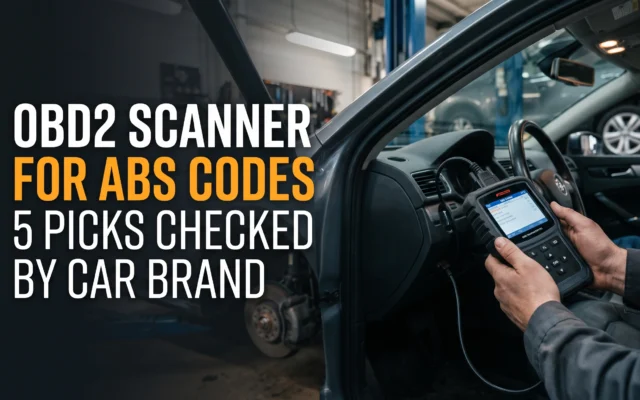
Write every code down before you clear anything. If you use one of the best OBD2 scanners that read ABS codes, leave brake codes in place when the car is headed to a shop.
Bidirectional tests: where care is needed
Bidirectional tests are where a scanner can cause harm, mostly to you rather than the car. Bidirectional control means the tool commands parts to act: it cycles a fan, runs the fuel pump or pumps the ABS unit.
Parts start without warning. Put the car in Park or Neutral, set the parking brake, block the wheels and stay with it. Some tests, such as an EVAP leak test, are run by the car once started, so check your service manual for how to stop one first.
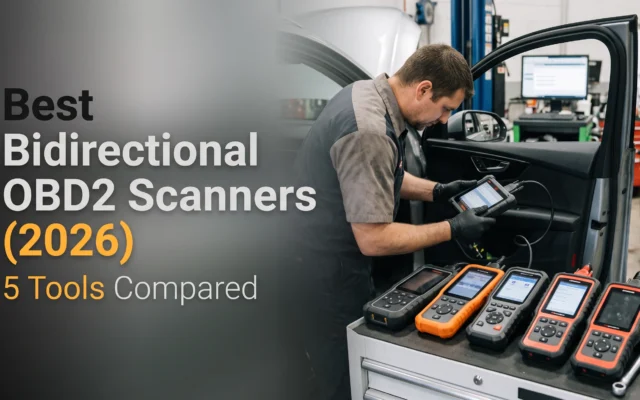
If you want this capability, see the best bidirectional OBD2 scanners (2026).
Cheap clone tools and the real risk
The real risk from a cheap clone is bad data and dropped connections, not a fried computer. Many budget adapters copy the ELM327 chip (a translator between your phone and the car), and some copies run old firmware or miss features they claim.
For reading, the worst case is a failed connection. The danger starts when a cheap tool writes, such as coding a module. If the link drops mid-write, the module can be left unusable.
A named brand that ships updates
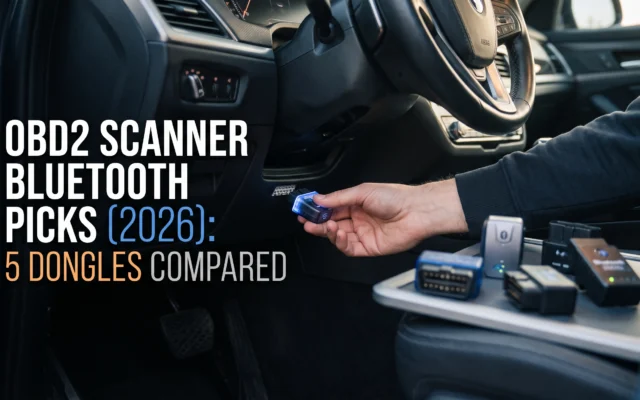
A maker that publishes manuals and firmware stands behind its tool. Cedar Buy’s list of the best Bluetooth OBD2 scanners (2026) sticks to documented brands.
CAN support for your car
US cars from the 2008 model year use CAN (ISO 15765-4) for diagnostics. Check the tool lists it and your make.
Read-only unless you need more
A tool that cannot write cannot corrupt a module. For codes and live data, read-only removes the biggest risk.
The version number on the box
Ignore it. Cheap adapters often report a chip version they do not fully support.
Leaving a dongle plugged in
A dongle left plugged in will not damage the computers, but it can drain the battery. Pin 16 of the port carries battery power with the key off, so the adapter keeps drawing current while parked.
As a worked example, 40 milliamps adds up to about 6.7 amp-hours in a week. Some adapters also stop modules from sleeping, which raises the drain. Unplug it if the car will sit for days.

What to never do with the engine running
Never plug in or pull out the scanner with the engine running. Autel’s AutoLink AL549 manual says to connect and disconnect only with the ignition off.
- Unplugging with the engine runningIgnition off, unplug, then restart if needed.
- Clearing codes with the engine runningErase with the key on and engine off.
- Running active tests in a closed garageExhaust gas is poisonous. Work outside.
- Watching the screen while drivingRecord the data or hand it to a passenger.
Key terms, explained
These terms appear on every scanner screen and decide which jobs carry risk.
Plain-language definitions
- Readiness monitor
- A self-test the car runs on an emissions system. Inspections check that enough show “complete.”
- Bidirectional control
- A feature that commands parts to switch on, such as a fan or pump. It needs a parked, secured car.
- Permanent code
- A confirmed emissions code that no scan tool or battery disconnect can erase. It clears only after the car verifies the repair.
Frequently asked questions
Can I leave my OBD2 scanner plugged in while driving?
Yes, a quality adapter can stay plugged in while you drive without harming the car. The catch comes when you park. The port’s pin 16 stays powered with the key off, so the adapter keeps drawing current and can drain the battery over several days. Unplug it whenever the car will sit.
Will clearing codes help me pass an emissions test?
No. Clearing codes resets the readiness monitors to not ready, and inspection stations check them. In Missouri, a 2001 or newer gasoline car fails with two or more monitors not completed. Fix the fault, then drive normally for several days so the monitors finish before your test.
Can a cheap Bluetooth OBD2 adapter brick my ECU?
Not from reading codes or live data, which only asks for information. A cheap adapter’s usual failure is a dropped connection. The risk is writing, such as coding a module: if the link drops mid-write, the module can be left unusable. Read with any adapter, but write only with a brand-name tool.
Is it safe to plug in a scanner with the engine running?
No. Autel’s AL549 manual says to connect and disconnect the scanner only with the ignition off. Plug it in with the car off, turn the key on, then start the engine if you want live data. Unplug in reverse order: engine off, ignition off, then remove the tool.
What to do next
Buy the scanner and read your codes today. That part is safe on any 1996 or newer car, and it is the cheapest way to learn what the light means.
Then keep three habits: write codes down before clearing, run bidirectional tests only on a parked and secured car, and unplug any adapter you are not using.
Article engagement
Comments (0)
No comments yet. Be the first to share what you think.
Sign in to join the conversation.