

Tonneau Cover Types Explained

November 12, 2026 · 10 min read

You are shopping for a truck bed cover and every listing says something different. This guide sorts the five main tonneau cover types (a tonneau cover is a truck bed cover) by price tier, bed access, security, weather sealing and install time. Read the table, then jump to the type that fits how you use your bed.
Updated — first published
Quick answer
Match the tonneau cover type to how often you open the bed: pick a soft roll-up for the lowest cost, a hard tri-fold or hard roll-up for balanced security, a retractable for daily access, and a hinged one-piece for the driest bed. No type is fully waterproof.
Who this guide is for
This guide is for pickup owners who have not yet chosen a cover style. It names no products, so pick a type first and a model second.
This is for you if
- You are weighing a roll-up against a tri-fold or a retractable
- You leave tools or gear in the bed
- You park outside in rain or snow
Look elsewhere if
- You already know your type and need a model for your exact truck
- Your truck has a camper shell or bed cap, which replaces a cover
How this guide was researched
Cedar Buy built this guide from maker and retailer documentation, not from physical testing.
Research method
- Cedar Buy read maker and retailer pages for each of the five types, covering materials, how each one opens and where each one seals against water.
- Bed access and security carried the most weight, because those two decide daily use.
- Brands and models are left out on purpose, because this is a type guide.
- Price tiers describe segments of the market, not current listings, and Amazon's prices change. Install times are typical ranges from retailer buying guides, not measurements.
- Specifications come from manufacturer documentation. Cedar Buy does not physically test products — see our editorial policy.
The five tonneau cover types in one table
The table ranks the five types on the five things that decide a purchase. Security and weather sealing separate them fastest.
| Type | Price tier | Bed access | Security | Weather sealing | Install time |
|---|---|---|---|---|---|
| Soft roll-up | Entry | Full bed when rolled up | Low | Good | 30-60 minutes, typically |
| Hard roll-up | Mid | Full bed when rolled up | Medium to high | Good to great | About 1 hour, typically |
| Tri-fold | Entry to mid (soft), mid (hard) | Partial or full: fold 1, 2 or 3 panels | Low (soft) to high (hard) | Good; hinges can seep | 30-60 minutes soft, 1-2 hours hard, typically |
| Retractable | Upper | Full or partial; locks at any point | High | Great | 1-2 hours, typically |
| Hinged one-piece | Upper; painted is highest | Full only by lifting the whole lid | High | Best of the five | Longest; plan on two people |
What the table does not show
Weather sealing is a ranking, not a guarantee. RealTruck, which owns several cover brands, says the most you will usually get from a properly installed cover is a few drops in a rainstorm. Heavy rain, car washes and worn seals can let in more.
Soft roll-up: cheapest, least secure
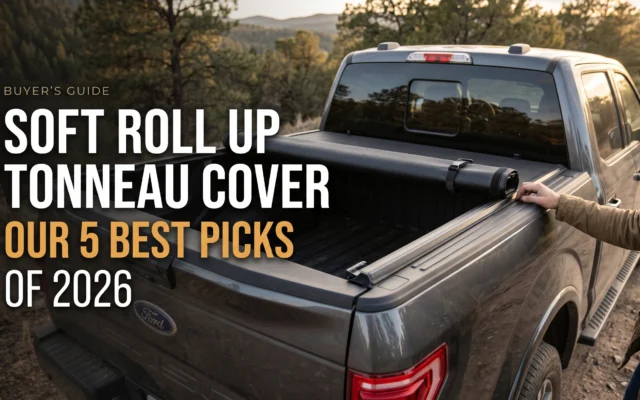
A soft roll-up is the lowest-cost tonneau cover type and the least secure. The entry price tier buys a vinyl or canvas panel on an aluminum frame, with good weather cover and full bed access but no real lock. A knife cuts vinyl, so it hides your gear and sheds rain without stopping a thief.
Roll it toward the cab and the whole bed opens. Its seamless top has no hinges for water to enter, which is its best weather feature. The trade-off is sun: vinyl fades and stiffens over the years. Get it if you haul groceries and yard supplies and nothing worth stealing.
Hard roll-up: the middle ground
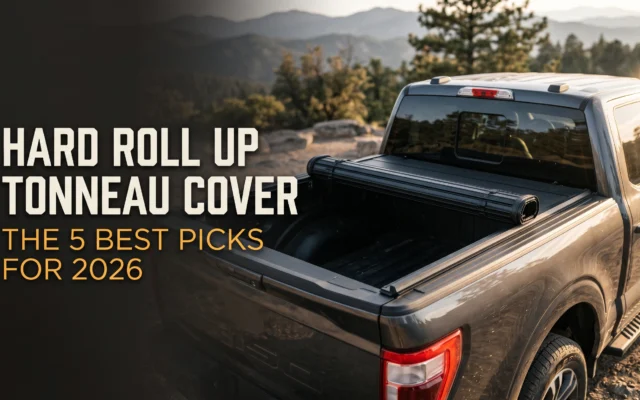
A hard roll-up is the middle ground between a soft roll-up and a hard tri-fold. The mid price tier buys aluminum slats under a vinyl or woven fabric overlay, so it rolls up for full bed access but resists cutting far better than bare vinyl.
RealTruck rates hard roll-ups as top-tier for security and good at keeping out rain and melting snow. You give up some bed space to a thicker bundle at the cab end, and you pay more than for a soft roll-up. Choose it if you want one-motion access and a cover that is more than fabric.
Tri-fold: bed access vs full coverage
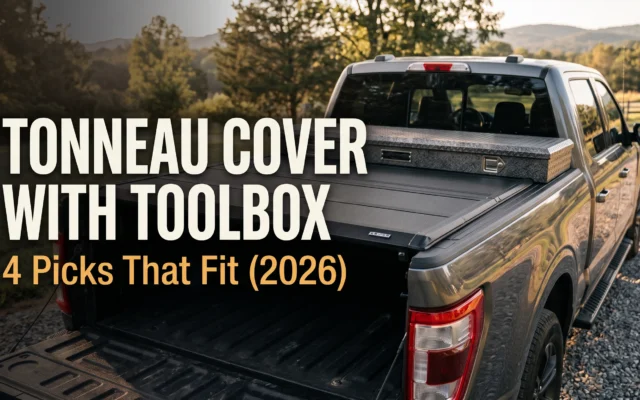
A tri-fold lets you open part of the bed while the rest stays covered, which is the choice it forces on you. Three hinged panels fold toward the cab, so you can open one third for a cooler or all three for a bulky load. Soft versions stretch a vinyl or canvas tarp over a folding aluminum frame. Hard versions use aluminum, fiberglass-reinforced plastic or thermoplastic panels.
Soft tri-folds sit in the entry to mid price tier and clamp on by hand with no tools. Hard tri-folds cost more and add real security, because rigid panels resist cutting and most latch from inside the bed, so the tailgate lock becomes your lock. The costs are hinges, where water can seep in, and a folded stack that can block part of your rear window.
Retractable: the canister trade-off
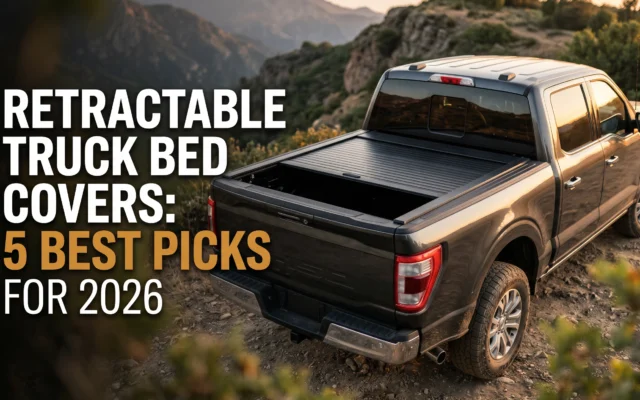
A retractable cover is the easiest to use every day, and its trade-off is a canister that permanently takes bed space. It sits in the upper price tier. The cover rolls out from a canister at the bulkhead (the wall behind the cab) and, on one maker's model, locks with a key at any point along the rails for partial access.
That maker lists its canister at 13.5 inches deep and 12 inches tall. That is room lost on every load, so measure what you carry. Rails channel water to drain hoses that connect to your bed's drain ports, and compression seals handle the tailgate end, which is why retractables rate great for weather.
Hinged one-piece: paint-matched, heavy
A hinged one-piece cover keeps out the most water and is the heaviest to handle. It is a single fiberglass or ABS plastic lid that overlaps the tailgate and bed rails, which leaves the hinge as the only likely leak point, according to RealTruck. It sits in the upper price tier, and painted versions cost the most.
Paint-matching gives a factory look, and gloss black versions cost less than painted ones. The lid lifts as one piece, so there is no partial opening. Tall cargo means leaving it up or lifting it off, which is a two-person job. Pick it if you mostly carry low cargo, park outdoors and care how the truck looks.
Which type fits how you use the bed
Pick by what you do most often, not by your rarest haul. Four situations cover most buyers.
You open the bed every day
Get a retractable if the upper price tier fits your budget. It opens in seconds and locks halfway. A soft or hard roll-up gives the same full-bed access for less.
You haul tall or bulky loads
Choose a soft roll-up or a tri-fold. Rolled or folded, either clears the full bed height. A retractable canister and a hinged lid both get in the way.
You leave tools in the bed overnight
Get a hard tri-fold, a retractable or a hinged one-piece, and lock the tailgate. Soft covers stop prying eyes, not a blade.
You are chasing the word waterproof
Ignore it. No type is fully waterproof. The real difference is how many hinges and seams sit between rain and your bed, and the hinged one-piece has the fewest.

Key terms, explained
These three terms appear on most listings and are rarely explained.
Plain-language definitions
- Bulkhead
- The wall at the front of the bed, behind the cab. Retractable canisters mount against it.
- Bed rails
- The top edges of the bed walls. Most covers clamp to them, so no drilling is needed.
- Water-resistant vs waterproof
- Water-resistant means a cover sheds most rain. Waterproof would mean none gets in, and no tonneau cover type promises that.
Mistakes that cost people money
The costliest mistake is buying a soft cover for gear that needs a lock, then buying a hard one a year later.
- Trusting the word waterproofExpect a few drops in heavy rain on any type. Keep electronics in a sealed box.
- Ignoring canister spaceA retractable canister takes room at the cab end. Measure your usual load first.
- Paying for security you will not useIf the bed holds mulch and a cooler, a soft roll-up does the job for the least money.
- Buying before checking your bedCovers are made for specific bed lengths and truck model years, and a factory bed-rail system can change the fit. Confirm fitment first.
Frequently asked questions
What are the main types of tonneau covers?
There are five main tonneau cover types: soft roll-up, hard roll-up, tri-fold (soft or hard), retractable and hinged one-piece. They differ in how they open and what they are made of. Soft covers cost least and secure least. Retractable and hinged one-piece covers sit at the top of the price range.
Which tonneau cover type is the most secure?
Hard covers are the most secure: hard tri-fold, retractable and hinged one-piece. Rigid panels resist cutting, and each one relies on a locked tailgate to block entry from the rear. A retractable can also lock at any point along its rails. Soft covers are the least secure because a knife cuts vinyl.
Is any tonneau cover completely waterproof?
No. A tonneau cover keeps out most rain, but none is fully waterproof. A hinged one-piece cover leaks least because only its hinge is a likely entry point, and retractables follow with drain hoses and tailgate seals. Expect a few drops in heavy rain on any type, and keep sensitive gear in a sealed box.
Can I install a tonneau cover myself?
Yes, most covers clamp to the bed rails with no drilling. Soft covers typically take 30 to 60 minutes. Hard tri-folds and retractables typically take 1 to 2 hours, and a retractable also needs its drain hoses connected. A hinged one-piece lid is heavy, so line up a second person to help.
What to do next
Write down what you carry and how often you open the bed this week, then pick from the table. Cedar Buy's rule of thumb: a soft roll-up for low-value cargo, a hard tri-fold or hard roll-up for gear you leave in the bed, a retractable if you open the bed daily, and a hinged one-piece for the driest bed.
Once you know the type, confirm that a cover is made for your truck's bed length and model year before you buy.
Article engagement
Comments (0)
No comments yet. Be the first to share what you think.
Sign in to join the conversation.